On many automation projects, "commissioning" and "start up" are used as if they mean the same thing. They do not. Mixing them up leads to unclear contracts, missed tests and arguments at handover about who was responsible for what.
Understanding commissioning vs start up helps you plan the schedule, assign the right people and avoid risky shortcuts. This guide explains each stage in plain language, shows where pre-commissioning fits, and gives practical examples for plants in the UAE.
What Is the Difference Between Commissioning and Start Up?
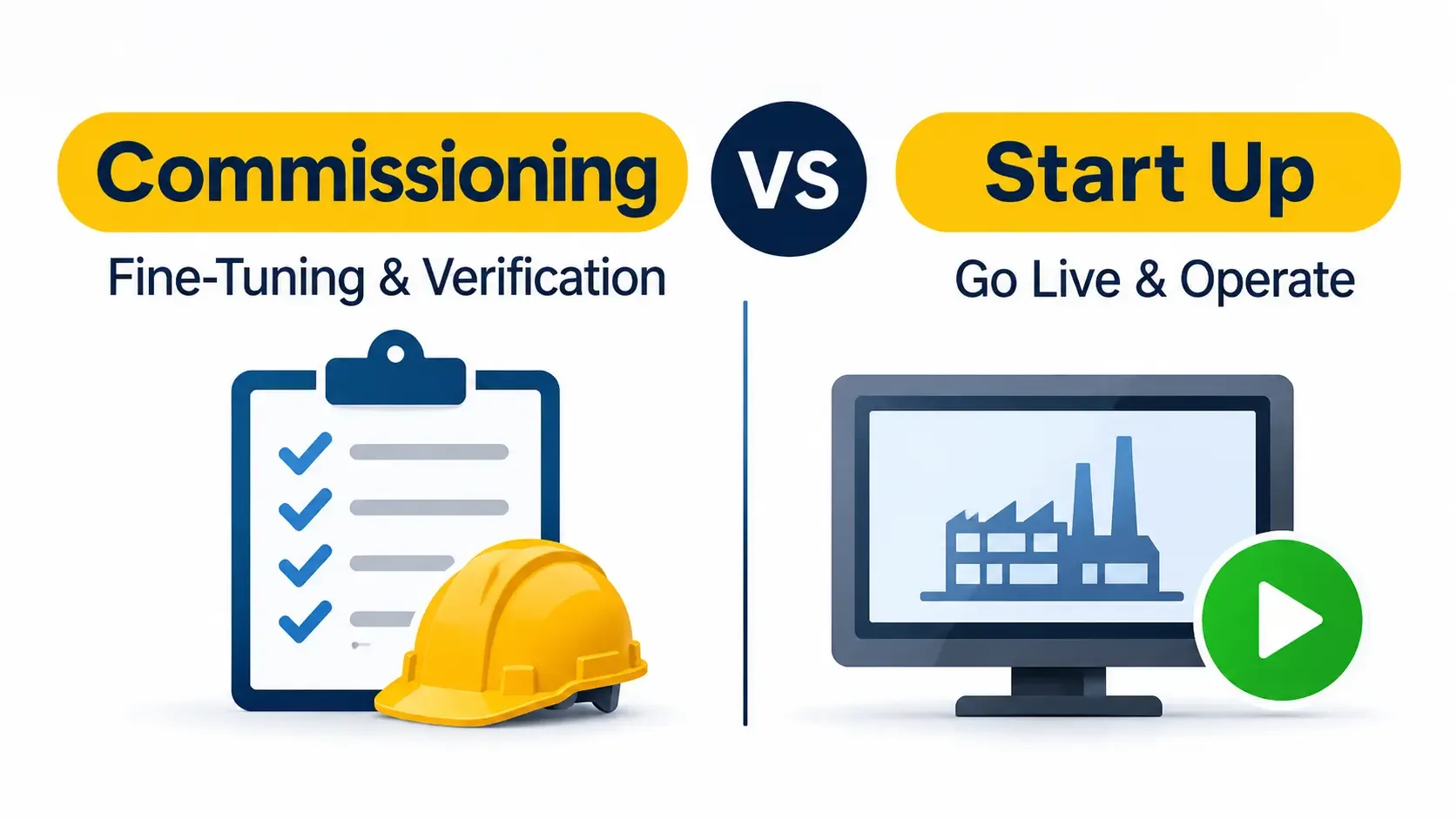
The difference between commissioning and start up comes down to what is being proven.
Commissioning proves that the installed equipment and control system work as designed. It is mostly done with the plant de-energised or running on simulated signals, before real process material is introduced.
Start up brings the plant into live operation. Real process fluid, product or load is introduced, and the plant is taken to stable production under real conditions.
In short:
- Commissioning asks: "Does everything work as specified?"
- Start up asks: "Can the plant now run safely and steadily on the real process?"
Commissioning comes first. Start up should only begin once commissioning is complete and signed off.
Where Each Stage Sits in an Automation Project
Most industrial projects follow a similar sequence, even if the names differ between companies and contracts:
- Design and engineering: control philosophy, drawings, I/O list and logic design
- Procurement and build: panels, instruments and field equipment are made and delivered
- Factory Acceptance Test (FAT): panels and systems are tested at the supplier's facility
- Installation and mechanical completion: equipment is installed, cabled and checked as physically complete
- Pre-commissioning: static checks that prove the installation is correct
- Commissioning: dynamic and functional testing of equipment and controls
- Start up: introduction of the real process and ramp-up to normal operation
- Performance testing and handover: proof of performance, documentation and training
- Operation and support: day-to-day running under maintenance or an AMC
Because the same words can mean slightly different things from one contract to another, always check the scope definitions in your project documents.
What Is Commissioning in Automation Projects?
Commissioning in automation projects is the structured process of testing and verifying that each part of the control system works correctly, individually and together, before the plant runs on real process material.
It usually covers:
- Powering up panels, drives and instruments in a controlled sequence
- Checking PLC, DCS and HMI configuration against the design
- Testing every instrument loop and control valve
- Verifying interlocks, alarms and trips against the cause-and-effect matrix
- Confirming that SCADA and operator screens show correct live values
- Running the Site Acceptance Test (SAT) where required
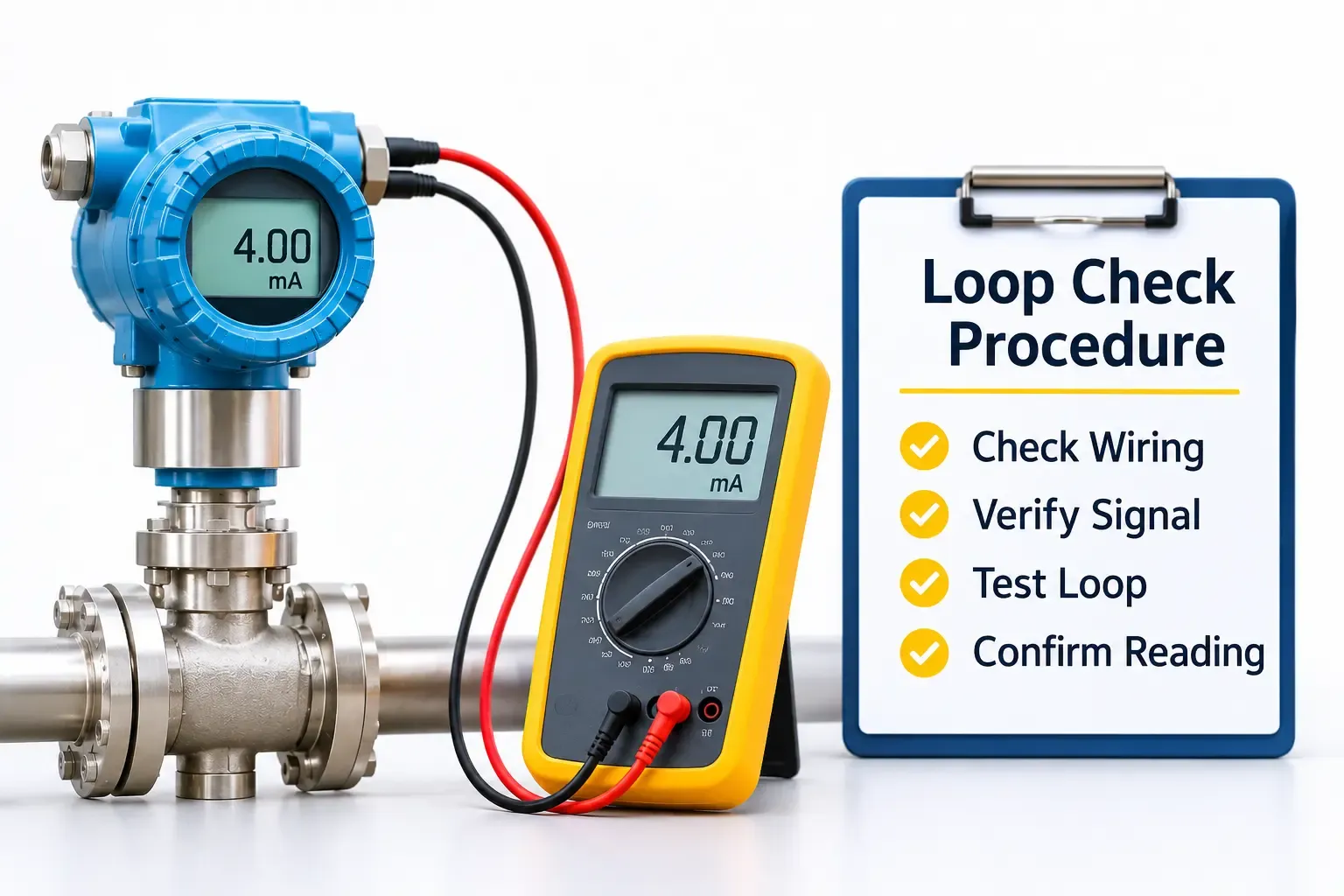
Good commissioning is methodical. Each tag, loop and function is tested, recorded and signed off. For a detailed example of one key activity, see our loop check procedure for testing instrument loops before start-up.
Control System Commissioning in Practice
Control system commissioning focuses on the logic and communication layer. Engineers check that inputs reach the PLC correctly, that outputs drive the right equipment, and that operator commands work as expected.
If logic needs correction during this stage, it helps to have the programming team close at hand. Our PLC programming services cover logic, HMI and migration work, so changes made during commissioning stay documented and controlled.
Pre-Commissioning vs Commissioning
Pre-commissioning vs commissioning is another common source of confusion. The simplest way to separate them is by whether the equipment is active.
Pre-commissioning is mostly static. Nothing is running on process material, and often nothing is energised on the process side. Typical activities include:
- Checking that installation matches drawings and datasheets
- Inspecting cable routes, glands, earthing and labelling
- Testing continuity, polarity and insulation
- Verifying instrument calibration
- Cleaning and flushing lines where relevant
- Powering panels without connected loads
Commissioning is dynamic. Equipment is energised, signals are active, and functions are tested under simulated or controlled conditions. Typical activities include:
- Full loop tests from field device to control system
- Valve stroking and fail-safe action checks
- Motor and drive run tests, often uncoupled first
- Interlock and trip testing
- Alarm and sequence testing
- SCADA and communications verification
Some teams treat loop checking as the last step of pre-commissioning, others as the first step of commissioning. What matters is that it happens before start up and that it is clearly written into the scope.
What Is Plant Start Up?
What is plant start up? It is the controlled transition from a tested, ready plant to a running one. Real process fluid, product, steam or load is introduced, and the plant is brought up step by step to its normal operating conditions.
Start up typically includes:
- Confirming that all pre-start-up safety checks and permits are complete
- Introducing utilities and process material in the planned sequence
- Bringing equipment online in stages rather than all at once
- Tuning control loops under real load
- Watching for abnormal vibration, temperature, pressure or flow
- Running performance or capacity tests agreed with the client
Start up is also where operations teams take a central role. Operators learn how the system behaves in real conditions, supported by the commissioning team.
Start Up at the Instrument Level
The word "start-up" is sometimes used at device level too. For example, bringing a flow meter or analyser online and confirming it reads within tolerance is often called instrument start-up. This is different from plant start up, which covers the whole process.
If your contract uses both meanings, define them clearly so that scope and responsibility are not left open.
Commissioning vs Start Up: A Side-by-Side Comparison
Here is how the two stages differ across the points that matter on a project.
Purpose
- Commissioning: prove the system works as designed
- Start up: bring the plant into live, stable operation
Process material
- Commissioning: usually none, or simulated or test media such as water
- Start up: real process fluid, product or load
Typical activities
- Commissioning: loop tests, logic tests, interlock tests, SAT
- Start up: staged ramp-up, loop tuning, performance testing
Who leads
- Commissioning: commissioning engineers and instrumentation and controls technicians
- Start up: plant operations with commissioning and vendor support
Main risk if skipped
- Commissioning: hidden wiring, logic and configuration faults reach live operation
- Start up: unsafe or unstable running, off-spec product, equipment damage
Typical output
- Commissioning: test records, loop check sheets, calibration certificates, SAT report
- Start up: stable operation, performance test results, acceptance and handover
Example: A Water Pumping Station Upgrade
Consider a pumping station that is receiving a new PLC, VFDs and SCADA connection.
Pre-commissioning
- Inspect the panel and field wiring against drawings
- Test cable continuity and insulation
- Check the calibration of level and pressure transmitters
Commissioning
- Test each transmitter and valve loop from the field to SCADA
- Run the pumps uncoupled, then coupled, on water trials
- Test low-level cut-out, high-pressure trip and standby changeover
- Confirm that alarms reach the operator screen
Start up
- Bring the station into the live network in stages
- Tune pump control under real demand
- Confirm stable operation, then complete operator training and handover
Each stage has a different goal. Skipping one creates risks that only show up later, usually at the worst moment.
Documents and Deliverables at Each Stage
Clear records protect both the contractor and the client. Typical documents include:
- Pre-commissioning: installation checklists, cable test sheets, calibration certificates
- Commissioning: loop check records, interlock test sheets, SAT reports, punch lists
- Start up: start-up procedures, performance test reports, as-built drawings
- Handover: signed acceptance, operation and maintenance manuals, spare parts lists, training records
Panel testing carried out at the factory also feeds into this chain. Our guide to the control panel design process from load schedule to FAT shows how early testing reduces problems on site.
Common Mistakes in Commissioning and Start Up
These are some of the problems that cause delays and rework:
- Treating the terms as interchangeable. Scope gaps appear between contractors.
- Compressing commissioning to meet a start-up date. Faults then show up during live operation.
- Starting without complete documentation. Teams lose time searching for drawings and datasheets.
- Skipping interlock and alarm tests. These are the functions that protect people and equipment.
- Not involving operators early. Staff meet the system for the first time under pressure.
- Leaving punch list items open. Small defects get forgotten and return as failures.
Commissioning and Start Up in UAE Projects
Local conditions shape how these stages are planned.
- Tight shutdown windows. Many plants can only stop for short periods, so testing must be well prepared. Our article on the PLC upgrade timeline for UAE plants explains how planning affects the schedule.
- Heat and dust. Outdoor testing is best planned for cooler hours, and enclosures and glands must be re-sealed after any work.
- Multiple contractors. Electrical, mechanical and controls teams need an agreed order of work.
- Strict client requirements. Sectors such as oil and gas expect full documentation and witnessed tests. See our guide to automation priorities for ADNOC suppliers and contractors.
When to Bring in a Commissioning Specialist
Small jobs can be handled in-house. Larger or time-critical projects benefit from specialists who have done it many times.
General Tech Automation's commissioning and start-up services cover pre-commissioning review, installation verification, loop checking, calibration, full system commissioning and operator training. For measurement packages, loop checking is typically completed within 24 hours per measurement point once site access is confirmed, with full commissioning usually taking 3 to 5 days depending on system size.
Our team also supports the field side through field instrumentation services, so the people who install the instruments can help prove they work.
What Happens After Start Up?
Start up is not the end of the story. Once the plant is running, regular care keeps it reliable. Many plants arrange an industrial AMC contract covering panels, VFDs, UPS and servo drives so that scheduled checks and priority support continue after handover.
Frequently Asked Questions
What is the main difference between commissioning and start up?
Commissioning proves that installed equipment and the control system work as designed, usually before real process material is used. Start up introduces the real process and brings the plant to stable operation. Commissioning comes first, and start up follows once it is signed off.
Is pre-commissioning part of commissioning?
Pre-commissioning is the static checking stage before commissioning proper. It covers installation, wiring, insulation and calibration checks, while commissioning tests the energised system and its functions. Many contracts group them together, so the scope should define the boundary.
Who is responsible for commissioning and start up?
Commissioning is usually led by commissioning engineers and instrumentation and controls technicians. Start up is led by plant operations, with support from the commissioning team, vendors and the project engineer. Responsibilities should always be written into the contract.
Can start up begin before commissioning is finished?
It is not recommended. Safety-critical items such as interlocks, trips and alarms must be tested and signed off before real process material is introduced. In large projects, systems may be commissioned and started up in stages, but each section should still be fully verified first.
How long do commissioning and start up take?
It depends on project size and complexity. A single measurement package may take a few days, while a plant-wide control system takes weeks or months. Good preparation, early access to completed areas and clear documentation shorten the schedule.
Final Thoughts
Commissioning proves the system works. Start up proves the plant can run on the real process. Treating them as separate, well-planned stages gives you safer operation, cleaner handover and fewer surprises after go-live.
If you are planning an automation project in the UAE and want experienced support, call General Tech Automation on +971 6 543 6933 or email mathews@generaltechuae.com to arrange your commissioning and start-up support.